

Ready to join the adventure? Head over to the official https://pinup-turkey.top/game/pin-up-casino-aviator/ page and start playing today!
Pin Up Aviator is an innovative and fast-paced game where players can experience the thrill of high-stakes action. The objective is simple: cash out at the right moment before the plane flies away! Its unique mechanics and dynamic gameplay have made it a favorite choice for those seeking excitement and big wins.
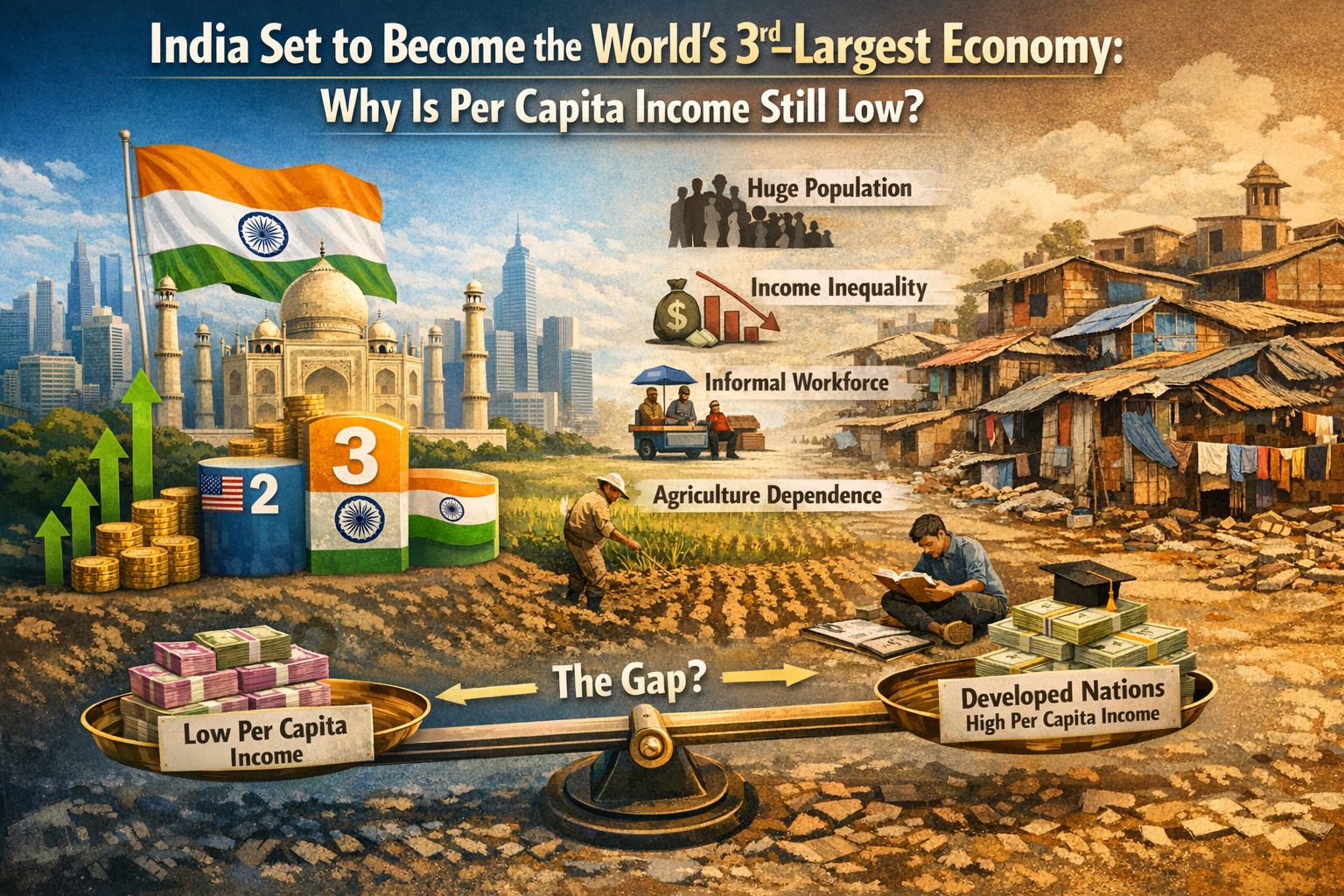
India is on the brink of a historic economic milestone. According to multiple global forecasts, India is expected to become the world’s third-largest economy, surpassing Germany and Japan in total GDP within the next few years. This achievement reflects decades of economic reforms, demographic advantages, and rapid growth across sectors like technology, manufacturing, and services.
However, this impressive headline hides a crucial paradox: India’s per capita income remains relatively low compared to other major economies. While the nation as a whole is growing fast, the average Indian still earns far less than citizens of developed and even many developing countries.
So, how can a country be one of the largest economies in the world and yet struggle with low per capita income? To understand this, we need to look beyond aggregate GDP numbers and examine structural, demographic, and socio-economic realities.
Understanding the Difference Between GDP and Per Capita Income
Gross Domestic Product (GDP) measures the total value of goods and services produced by a country in a year. It reflects the overall size of an economy but says little about individual prosperity.
Per capita income, on the other hand, divides total national income by the population. It indicates the average income per person, offering a better picture of living standards.
India’s case highlights this distinction clearly. Even if the total economic pie is expanding rapidly, it has to be shared among more than 1.4 billion people, which significantly dilutes the per-person share.
India’s Massive Population: The Biggest Factor
The single most important reason behind India’s low per capita income is its huge population.
- India recently overtook China as the world’s most populous country.
- Economic growth, no matter how fast, must be divided among a vast number of people.
- Countries like Germany or Japan have far smaller populations, so even moderate GDP levels translate into higher per capita income.
In simple terms, India’s economy is large because of scale, not because its citizens are individually wealthy.
Uneven Income Distribution and Economic Inequality
Economic growth in India has not been evenly distributed.
- A significant portion of wealth is concentrated among a small percentage of the population.
- High-income urban professionals, corporate owners, and investors benefit more from growth.
- Rural populations and informal workers often see limited income gains.
This income inequality means that while GDP rises, the average income figure does not reflect real improvements for a large section of society.
Dominance of the Informal Sector
Nearly 80–85% of India’s workforce is employed in the informal sector, which includes:
- Daily wage laborers
- Small shop owners
- Street vendors
- Agricultural workers
These jobs typically offer:
- Low wages
- Limited productivity
- No job security or social benefits
Low productivity across such a large workforce directly impacts per capita income levels. In contrast, developed economies rely more on high-productivity, formal employment.
Agriculture Employs Many, Produces Less
Agriculture remains a major employer in India, but it contributes a much smaller share to GDP.
- Around 40% of Indians depend on agriculture for livelihood.
- The sector suffers from low mechanization, fragmented landholdings, and weather dependence.
- Income levels in agriculture remain significantly lower than in industry or services.
When a large population depends on a low-income sector, average income naturally stays suppressed.
Slow Manufacturing Expansion Compared to Peers
Historically, countries that achieved high per capita income did so through mass industrialization.
- China moved millions into manufacturing jobs with higher wages.
- South Korea and Vietnam followed similar paths.
India’s manufacturing sector, despite initiatives like Make in India, has grown more slowly due to:
- Infrastructure gaps
- Regulatory complexity
- Skill mismatches
- High logistics costs
As a result, India has skipped large-scale industrial job creation, limiting income growth for the masses.
Education and Skill Gaps
Human capital plays a critical role in determining income levels.
While India produces a large number of graduates, challenges remain:
- Quality of education varies widely.
- Many students lack job-ready skills.
- Vocational and technical training is underdeveloped.
This leads to underemployment, where people work in jobs that do not fully utilize their education or potential, keeping wages low.
Urban–Rural Divide
India’s growth story is heavily urban-centric.
- Cities contribute a large share of GDP.
- Rural areas lag in infrastructure, healthcare, and employment opportunities.
Since a majority of the population still lives in rural regions, national per capita income remains modest despite rapid urban economic expansion.
Currency Value and Global Comparison
Per capita income is often measured in US dollars, which introduces another factor: currency valuation.
- The Indian rupee is weaker compared to the US dollar.
- Even if domestic incomes rise, their dollar value may appear lower.
While purchasing power parity (PPP) offers a more balanced comparison, global rankings typically use nominal figures, making India’s per capita income seem even smaller.
High Growth Rate, Low Starting Point
India’s economy is growing faster than most major economies, but it started from a very low base.
- Developed countries built wealth over centuries.
- India’s modern economic expansion accelerated only after the 1991 economic reforms.
Even sustained high growth takes decades to significantly raise per capita income when starting from a low level.
Can Per Capita Income Rise in the Future?
Despite current challenges, India’s future outlook is promising.
Key drivers for improvement include:
- A young workforce and demographic dividend
- Rapid digitalization and startup growth
- Infrastructure development (roads, ports, railways)
- Manufacturing push through policy reforms
- Expanding middle class and domestic consumption
If India successfully creates high-quality jobs, improves education, boosts manufacturing, and formalizes its workforce, per capita income can rise steadily over the next two decades.
Conclusion: Growth Is Real, But the Journey Is Long
India becoming the world’s third-largest economy is a remarkable achievement and a testament to its growth potential. However, size alone does not guarantee prosperity for all.
Low per capita income reflects deep-rooted structural issues—population pressure, inequality, informal employment, and sectoral imbalances. Addressing these challenges requires long-term policy focus, inclusive growth, and sustained investment in people.
India’s economic rise is undeniable. The next and more important challenge is ensuring that this growth translates into higher incomes and better living standards for every Indian.
